


Are you ready to kick off your 2026 marketing campaigns with a bang? Today’s fast-changing manufacturing world demands new strategies to keep up.
The manufacturing world is changing fast, thanks to connected technologies. Companies are using these tools to grow their businesses. Getting more leads is key for manufacturers wanting to reach more customers and make more money.
Need help with marketing strategies that can change your game? Call (435) 292-6678 to learn how to succeed in the digital world.
Key Takeaways
- Transformative marketing strategies drive business growth for manufacturers.
- Digital transformation is key to staying competitive in the manufacturing industry.
- Effective lead generation is critical for expanding the customer base.
- Manufacturers must adopt innovative strategies to stay ahead.
- Expert guidance is available to help businesses thrive in the digital age.
Understanding the Unique Landscape of Manufacturing Marketing
The manufacturing sector is changing fast, thanks to new tech and shifting consumer tastes. Manufacturers face special challenges that need custom marketing solutions.
Industry Challenges and Opportunities
Manufacturers must adapt to digital changes, manage complex supply chains, and stay ahead globally. Yet, these hurdles also bring chances for growth and innovation. Embracing digital technologies can boost efficiency, quality, and smart decision-making.
Experts say digital adoption is key for manufacturers to stay competitive. This move towards digital opens up new marketing paths, helping manufacturers reach their audience better.
Key Trends Shaping Manufacturing Marketing
Several trends are changing manufacturing marketing. These include:
- AI-driven insights that help manufacturers understand customers and improve marketing.
- Cloud-based collaboration tools that make communication and data sharing easier across the supply chain.
- Sustainability and environmental responsibility, which are growing concerns for consumers and businesses.
By keeping up with these trends, manufacturers can thrive in a fast-changing market.
The Importance of Niche Marketing
Niche marketing is vital in manufacturing, where products are often unique and meet specific needs. By focusing on niches, manufacturers can stand out and build a strong brand.
Effective niche marketing means knowing your audience’s unique needs and crafting marketing that speaks to them. This can boost loyalty and drive business growth.
Building a Strong Brand Identity
In the manufacturing world, a strong brand identity is key for growth and keeping customers. It’s made up of many parts that show how a brand is seen by its audience.
Defining Your Brand’s Purpose
Knowing your brand’s purpose is the first step to a strong identity. It means figuring out what drives your company. A clear purpose helps you stand out and connect with customers on a deeper level.
Key aspects to consider when defining a brand’s purpose include:
- Understanding the company’s mission and vision
- Identifying the core values that resonate with the target audience
- Recognizing the unique selling proposition (USP) that sets the brand apart
Developing a Compelling Brand Story
A good brand story is key to engaging customers and sharing your purpose. It should be real, relatable, and the same everywhere. By telling your brand’s story, you can make a strong emotional bond with your audience.
Effective brand storytelling involves:
- Narrating the brand’s history and milestones
- Highlighting customer success stories and testimonials
- Showcasing the brand’s commitment to innovation and quality
Visual Branding and Consistency
Visual branding like logos, colors, and fonts is vital for a recognizable brand. Being consistent with these elements in all marketing is key to a strong brand image.
| Visual Branding Element | Description | Importance |
|---|---|---|
| Logo | A symbol or graphic representation of the brand | High |
| Color Scheme | A palette of colors used consistently across branding materials | High |
| Typography | The style and appearance of text used in branding | Medium |
By focusing on these areas, manufacturing companies can create a brand identity that connects with their audience. This supports their growth goals.
Digital Marketing Strategies for Manufacturers
Manufacturers are now using new digital marketing strategies to stay ahead. In today’s world, having a strong online presence is key. It helps them reach more customers and boost sales.
Utilizing SEO for Manufacturing Websites
Search Engine Optimization (SEO) is vital for manufacturers online. It makes their websites more visible, bringing in more visitors. They use keywords like “marketing automation for manufacturers” to show up in search results.
A good SEO plan helps manufacturers stand out online. Important steps include:
- Doing deep keyword research to find the right terms.
- Improving website elements like meta tags and titles.
- Creating content that’s engaging and targets specific keywords.
Social Media Engagement Techniques
Social media lets manufacturers connect with people, build their brand, and get more website visitors. Good social media work means:
- Sharing content that people find interesting.
- Using paid ads to reach more people.
- Quickly answering comments and messages.
By using social media well, manufacturers can build a loyal community. This helps keep customers coming back.
Pay-Per-Click Advertising Fundamentals
Pay-Per-Click (PPC) advertising is great for getting more website visitors fast. Manufacturers create ads that show up in searches and on other sites. This helps them reach people looking for what they offer.
Key PPC basics are:
- Finding the right keywords for ads.
- Writing ad copy that gets clicks.
- Improving landing pages to get more conversions.
Learning PPC can really help manufacturers show up more online and sell more.
Content Marketing in Manufacturing
Manufacturers can boost their brand and connect with clients better with a strong content marketing plan. This strategy is key for marketing for manufacturers. It lets them share their knowledge and gain trust with their audience.
Crafting Valuable Industry-Specific Content
It’s important to make content that speaks to the manufacturing world. You need to know what the industry needs and solve its problems. Content can be blog posts, whitepapers, or technical guides.
Key considerations for crafting valuable content include:
- Understanding the target audience’s pain points
- Providing actionable insights and solutions
- Utilizing relevant industry terminology
Webinars and Educational Resources
Webinars and educational resources are great for content marketing in manufacturing. They let you share knowledge, show off products, and lead in your field. Hosting webinars on relevant topics can draw in new customers and boost your reputation.
Benefits of webinars include:
| Benefit | Description |
|---|---|
| Establishing Thought Leadership | Demonstrating expertise in the manufacturing sector |
| Generating Leads | Attracting interested customers |
| Showcasing Products/Services | Highlighting solutions to industry challenges |
Case Studies and Success Stories
Sharing case studies and success stories can show the value of your products or services. Real examples of how you’ve helped others can build trust and credibility with new customers.
Good content marketing, like making valuable content, hosting webinars, and sharing success stories, is key for B2B marketing strategies in manufacturing. These methods help manufacturers grow their brand, connect with their audience, and increase business.
Leveraging Email Marketing
Email marketing is a key part of a good marketing plan for manufacturers. It helps them talk directly to their audience, build loyalty, and increase sales.
Designing Effective Email Campaigns
Good email campaigns are meticulously planned and done well. They start with knowing who to talk to and what action they want.
- Craft compelling subject lines that encourage opens
- Use engaging content that resonates with the audience
- Include clear calls-to-action to drive conversions
Personalization and Segmentation Strategies
Personalization is key to successful email marketing. By dividing the email list, manufacturers can send messages that fit each group better.
- Segment email lists based on customer behavior and preferences
- Use data to personalize email content and offers
- Implement marketing automation to streamline the process
Measuring Email Campaign Success
To see how well email marketing works, manufacturers need to watch key numbers. These include how many open the email, click on links, and buy something.
| KPI | Description | Importance |
|---|---|---|
| Open Rate | Percentage of recipients who open the email | Indicates subject line effectiveness |
| Click-Through Rate | Percentage of recipients who click on a link | Measures content relevance and engagement |
| Conversion Rate | Percentage of recipients who complete a desired action | Directly impacts sales and ROI |
By using email marketing well, focusing on personal touches, and looking at how campaigns do, manufacturers can really boost their industrial marketing solutions. They can also get a better return on investment with marketing automation for manufacturers.
The Role of Trade Shows and Events
Trade shows and events are key in the manufacturing world. They offer great chances for networking and showing off your brand. At these events, manufacturers can display their newest products and tech, meet new clients, and learn about the latest trends.
Maximizing Your Presence
To make the most of industry events, you need a solid plan. This means creating an eye-catching booth, training your sales team, and showing off your products’ best features.
Pre-event planning is essential. Make sure your marketing materials are fresh, and your team knows the event’s goals. At the event, aim to leave a lasting impression with demos or special offers.

Networking Techniques for Success
Good networking at trade shows can open up big business doors. Focus on making real connections with people who might become clients or partners. Be friendly, listen to what they need, and offer solutions that fit their needs.
- Prepare a short pitch that clearly shows what you offer.
- Connect with people on social media before, during, and after the event.
- Collect business cards and follow up with new contacts after the event.
Post-Event Follow-Up Strategies
Following up after a trade show or event is vital for turning leads into sales. Have a plan to reach out to new contacts, sharing more info or offers you discussed at the event.
Personalization is important in your follow-up messages. Make each message specific to your conversation with the contact. Make sure your sales team is working with your marketing team.
Understanding Your Target Audience
To make marketing strategies work, manufacturers must know their audience well. This knowledge is the base for lead generation for manufacturers. It lets businesses make marketing that speaks to their future clients.
Knowing your audience is more than just their demographics. It’s about their needs, likes, and problems. This way, manufacturers can make campaigns that really talk to their audience. This boosts the chance of getting them to buy.
Building Customer Personas
Creating customer personas is a great way to get to know your audience. These are detailed pictures of different parts of your audience. They show things like job roles, industry challenges, and how they buy things.
To make good customer personas, manufacturers can do surveys, interviews, and look at customer data. This info helps make marketing messages that really hit home with the audience.
Industry-Specific Market Research Methods
Doing market research specific to your industry is key to knowing your audience. This research gets data on trends, what competitors are doing, and what customers like. By looking at this data, manufacturers can find ways to better their SEO for manufacturing businesses and marketing plans.
Some good ways to do market research include:
- Surveys and focus groups
- Looking at competitors
- Listening to social media
- Reading industry reports and studies
| Research Method | Description | Benefits |
|---|---|---|
| Surveys and Focus Groups | Gathering direct feedback from customers and prospects | Provides firsthand insights into customer needs and preferences |
| Competitor Analysis | Analyzing competitors’ strengths, weaknesses, and strategies | Helps identify market gaps and opportunities for differentiation |
By mixing customer personas with specific market research, manufacturers get a full picture of their audience. This knowledge is essential for making marketing plans that help the business grow.
The Importance of Analytics and Data
Analytics and data are key in manufacturing marketing. They help make decisions and improve campaigns. In today’s world, relying only on intuition is not enough.
Analytics and data help manufacturers understand their audience better. They can see how well their marketing works. This knowledge helps grow their business.
Measuring Marketing Performance
It’s vital for manufacturers to measure how well their marketing works. They need to track things like website visits, social media activity, and new leads.
By looking at these numbers, manufacturers can see which marketing methods work best. They can then change their plans to get better results.
Key Performance Indicators for Manufacturing
Key performance indicators (KPIs) help measure marketing success. For manufacturers, important KPIs include:
- Website traffic and engagement metrics
- Lead generation and conversion rates
- Social media engagement and follower growth
- Customer acquisition costs and return on investment (ROI)
Tracking these KPIs gives manufacturers insights into their marketing. They can use this information to improve their strategies.
Tools for Data Analysis
To analyze data and measure marketing success, manufacturers use various tools. Some include:
- Google Analytics for website traffic and behavior analysis
- Social media analytics tools for tracking engagement and sentiment
- Customer relationship management (CRM) software for lead tracking and management
- Marketing automation platforms for streamlining and optimizing marketing campaigns
These tools help manufacturers understand their marketing performance. They can make informed decisions to grow their business.
Building Partnerships and Collaborations
Partnerships in manufacturing are key to growth and innovation. They help businesses offer more, reach more markets, and grow together. This teamwork drives success through shared goals.
Benefits of Networking with Other Manufacturers
Networking with other manufacturers brings many benefits. It opens doors to new tech, shared knowledge, and boosts credibility. By teaming up, manufacturers can:
- Share resources and cut costs
- Learn about the latest trends and best practices
- Grow their market reach through joint marketing
Strategic networking also makes supply chains stronger and helps create new products or services. For example, a manufacturer might work with a tech firm to add advanced automation. This makes production more efficient and competitive.
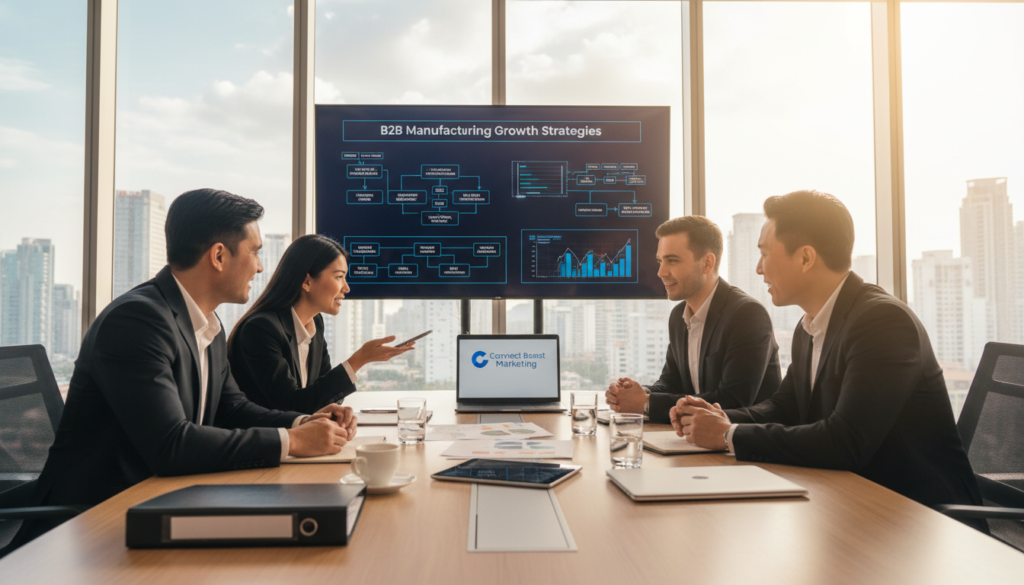
Strategic Alliances for Enhanced Marketing
Creating strategic alliances is a strong B2B marketing strategy. It boosts a manufacturer’s market presence. By teaming up with other businesses, manufacturers can:
| Alliance Type | Benefits | Example |
|---|---|---|
| Joint Marketing Efforts | More visibility, split marketing costs | Co-branded ads |
| Technology Partnerships | New tech access, better products | AI in manufacturing |
| Supply Chain Collaborations | Stronger supply chains, lower costs | Vendor-managed inventory |
These alliances help manufacturers boost their marketing and drive innovation. Using marketing automation for manufacturers makes these efforts more focused and effective.
Future Trends in Manufacturing Marketing
The world of manufacturing marketing is about to change a lot. This change comes from new tech, what customers want, and how businesses work.
Automation and AI in Marketing Strategies
Automation and AI are changing digital marketing for makers. They help with better data, more personal customer experiences, and smarter marketing plans. This means makers can get more people to visit their websites.
The Rising Importance of Sustainability
Now, making things that are good for the planet is key in marketing. People want to buy products that are green. Makers need to show they care about the environment in their ads.
Adapting to Changing Consumer Behaviors
How people shop and what they want is changing fast. This is because of new tech and changing values. Makers need to keep up with these changes to stay ahead and grow.