

Understanding Timelines: How Long Until You See Results From Your Digital Marketing Agency?
Digital marketing results typically start showing within a few months, but the full impact often takes a year or more. Small and local businesses wondering “how long should I expect to see results from my digital marketing agency” need realistic, data-driven expectations. In this guide, you’ll discover general and channel-specific timelines for SEO, PPC, social media, content, and email marketing; the key factors that influence speed; how to measure progress; and how Connect Boost aligns strategies and transparency to deliver measurable growth.
What Is the Typical Digital Marketing Results Timeline for Small and Local Businesses?
Digital marketing timelines blend strategy, execution, and cumulative momentum to drive leads and conversions over time. Initial traction often appears in three to six months, while meaningful ROI generally takes six to twelve months as efforts compound.
For example, a restaurant can see visitor growth after three months of local SEO but often needs six months before reservations steadily increase.
The following outline offers a rule of thumb for most small to medium-sized local businesses:
- 3–6 Months (Initial Impact) – Traffic increases, early engagement signals, baseline conversions.
- 6–12 Months (Growth Phase) – Lead generation stabilizes, conversion rates climb, initial ROI.
- 12+ Months (Maturity and Scale) – Established authority, sustained pipeline, compounding returns.
This progression underscores why patience and consistent investment matter before evaluating long-term success.
How Long Does It Take to See Initial and Significant Results?
Initial results surface within three to six months through targeted campaigns, on-page optimizations, and paid media experiments. Agencies conduct audits, launch quick-win optimizations, and build foundational assets in the first quarter. Significant results—measured in lead volume and conversion consistency—typically emerge around month six to nine as algorithms and audiences react to ongoing efforts.
Key milestones by phase:
- Months 1–3: Technical fixes, ad launches, baseline content publishing.
- Months 4–6: Ranking improvements, ad cost-per-click optimization, social engagement upticks.
- Months 7–12: Consistent lead flow, improved conversion rates, measurable ROI.
These stages reflect a cumulative approach where each activity accelerates subsequent performance.
Why Is Digital Marketing a Long-Term Investment, Not a Quick Fix?
Digital marketing relies on building relationships with search engines and audiences over time rather than instant solutions. Quality content, backlink profiles, and data-driven ad optimization require continuous refinement and adaptation. For instance, a blog strategy launched today gains authority gradually as articles earn links and social shares, rather than delivering viral traffic immediately.
Long-term investment matters because sustained visibility compounds: improved SEO authority, optimized ad campaigns, and growing social communities amplify each other over months to years. This cumulative effect becomes the basis for predictable, cost-effective growth.
What Are the Key Metrics to Track Progress Over Time?
Tracking a mix of traffic, engagement, leads, and revenue metrics ensures you evaluate both short-term impact and long-term value creation. Core KPIs include:
- Organic Traffic Growth – Signals SEO momentum.
- Click-Through and Conversion Rates – Measures ad and content effectiveness.
- Lead Volume and Cost-Per-Lead – Gauges pipeline health.
- Customer Acquisition Cost (CAC) vs. Lifetime Value (LTV) – Validates ROI.
- Engagement Metrics (Likes, Shares, Comments) – Reflects brand resonance.
Monitoring these KPIs at each stage provides transparency into channel performance and informs strategic adjustments.
How Long Does SEO Take to Show Results?
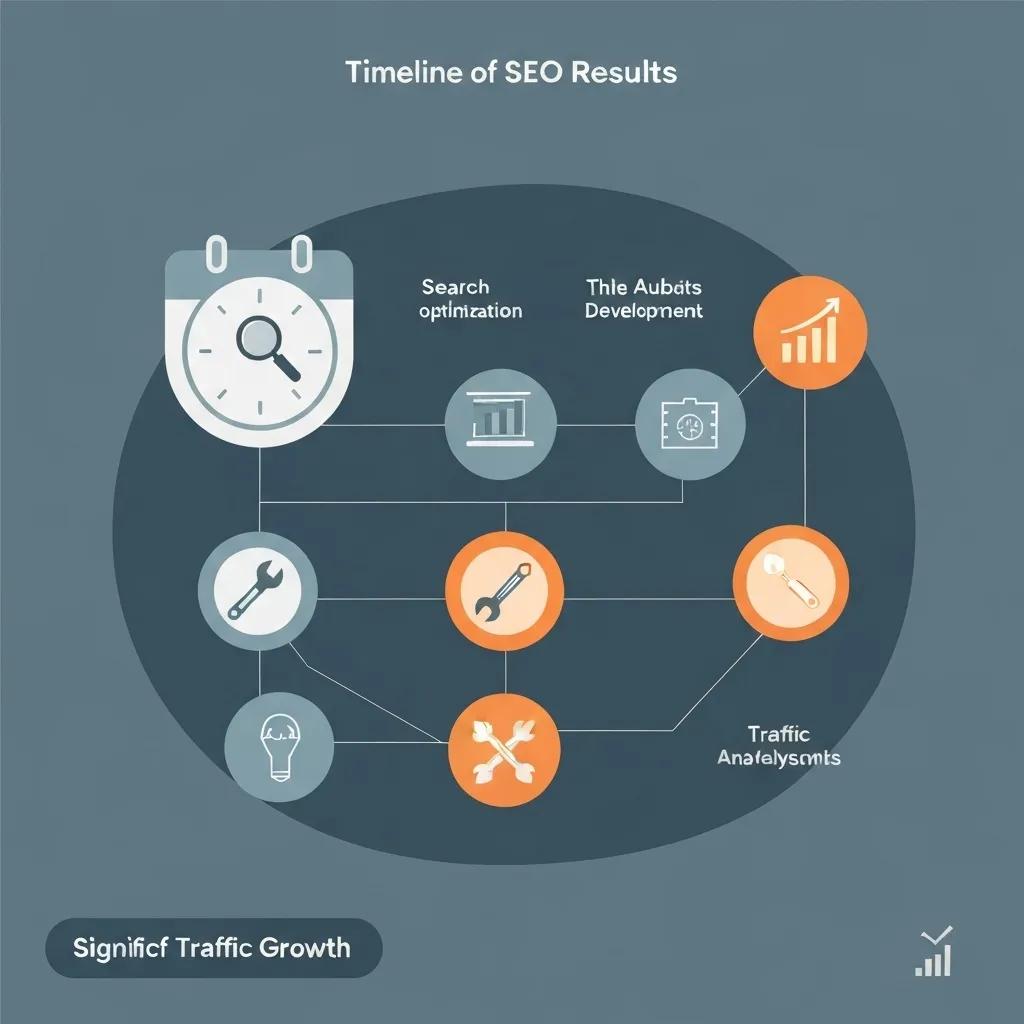
Search Engine Optimization typically requires three to six months for initial ranking improvements and six to twelve months for significant organic authority. Connect Boost’s Search Engine Optimization Services focus on technical audits, content strategy, and link building to accelerate local visibility for Utah businesses.
The following table details typical SEO phases and outcomes:
What Happens in the First 3 Months of SEO?
The initial quarter of any SEO campaign centers on defining and resolving technical issues, refining keyword targeting, and aligning site structure with search intent. Audits reveal crawl errors and performance gaps, while on-page optimization tailors metadata and content. For example, correcting mobile responsiveness and internal linking early ensures faster indexing and a stronger foundation for subsequent efforts.
Technical readiness and optimized page structures set the stage for visible ranking improvements in the following months.
When Do You See Initial Ranking Improvements and Traffic Growth?
Ranking gains most often appear around months four to six as search engines process optimized pages and initial backlinks. Targeted content and improved site health translate into higher visibility for priority keywords. Early traffic growth frequently comes from long-tail terms before broad head keywords gain traction.
These initial wins validate strategy and guide further content and link development for broader keyword coverage.
How Long Until SEO Delivers Significant Authority and Top Rankings?
Domain authority and top-10 rankings generally materialize within six to twelve months, depending on competition and site history. Achieving a top-3 position for competitive terms often extends into the 12- to 24-month range, as search engines reward consistent quality and relevance.
How Do Factors Like Domain Age and Competition Affect SEO Timelines?
Older domains with established backlink profiles often see faster improvements than brand-new websites. Conversely, highly competitive markets (e.g., real estate or fitness in metropolitan areas) require more time investment to outrank established players.
What Role Does Content Quality and Link Building Play in SEO Results?
High-quality, authoritative content attracts natural links and engages audiences, while proactive outreach earns backlinks that boost relevance. A balanced content-and-link strategy is essential for sustained ranking improvements and credibility.
What Is the PPC Campaign Results Timeframe?

Pay-Per-Click campaigns deliver immediate visibility, with lead generation beginning on day one, but optimization and profitability unfold over several months. Connect Boost’s Marketing Management Services integrate Google Ads and social paid ads to drive and refine traffic for small local businesses.
Early budget deployment ensures your ads appear instantly above search results and on social feeds, while ongoing data analysis optimizes performance.
How Quickly Can PPC Generate Traffic and Leads?
PPC campaigns can drive clicks and inquiries within hours of launch. Advertisers see immediate traffic volume and can test messaging and targeting in real time. Quick-win ad creatives often deliver the first leads in days rather than weeks.
When Does PPC Optimization Improve Campaign Performance?
After two to three months of data collection, performance metrics stabilize and reveal patterns in cost-per-click and conversion rates. Advanced bid strategies, audience refinements, and creative testing occurring in this phase reduce costs and boost quality scores.
How Long Until You See Significant ROI from PPC?
Sustained profitability typically emerges six to twelve months into a PPC program as cost reductions from optimized bids combine with conversion rate improvements. Consistent budget allocation and strategic scaling are key to this maturation phase.
How Does Budget Influence PPC Speed and Scale?
Larger budgets accelerate data gathering and audience reach, enabling faster optimization cycles. Smaller budgets may require longer testing periods but still yield valuable insights for precise targeting.
What Are the Differences Between Google Ads and Social Media Paid Ads Timelines?
- Google Ads: Immediate intent-driven traffic with cost per click optimized within weeks.
- Social Paid: Branding and engagement grow over one to three months as ad creative and audience segments refine.
These channel distinctions inform how quickly each medium contributes to lead pipelines.
How Long Does Social Media Marketing Take to Show ROI?
Social media marketing combines brand building with community engagement, where early traction appears in one to three months and deep loyalty in six to twelve months. Connect Boost’s Social Media Management Services craft content calendars and paid social strategies to accelerate both organic and paid ROI for local brands.
Organic engagement sparks initial follower growth, while paid campaigns amplify reach and conversions.
When Do You See Initial Engagement and Follower Growth?
In the first one to three months, consistent posting and community management spark likes, comments, and new followers. Early content themes and hashtags reveal top-performing formats.
How Long Until Social Media Builds Brand Awareness and Loyalty?
Between three and six months, regular storytelling and interactive campaigns establish brand affinity. By month six to twelve, repeat engagement and customer advocacy begin to translate into referrals and inquiries.
What Are the Differences Between Organic and Paid Social Media Timelines?
Organic strategies deliver slow-burn growth and trust over months, while paid social campaigns can trigger spikes in traffic and leads within days, requiring ongoing budget and creative refresh for sustained ROI.
What Are the Expected Timelines for Content Marketing Results?
Content marketing drives authority and audience relationships over the long term, with initial traction in three to six months, deeper engagement in six to twelve months, and full ROI after one to two years. High-impact Services — spanning blog posts, video series, and downloadable assets — underpin Connect Boost’s content strategies.
Quality content accumulates organic visibility and backlink equity as it matures.
When Do Initial Content Marketing Results Appear?
The first three to six months typically yield measurable increases in page views, time on site, and social shares as newly published articles and videos receive attention from your target audience.
How Does Consistency Affect Content Marketing Success Over Time?
Publishing content on a regular cadence (weekly or bi-weekly) accelerates authority gains, with six to twelve months of consistent output often doubling traffic and lead generation compared to sporadic publishing.
What Is the Timeline for Maximum Content Marketing ROI?
Over one to two years, evergreen content continues to drive organic traffic and leads with minimal ongoing investment. Cumulative backlink growth and refined topic clusters yield compound returns.
How Do Blog Posts, Videos, and Other Content Types Differ in Timeline?
How Long Until Email Marketing Shows Results?
Email marketing yields quick engagement, with open and click rates visible within weeks, conversion tracking in two to three months, and long-term list growth and automation benefits after three months.
Nurturing sequences and automated workflows unlock continued ROI as your subscriber base expands.
When Do You See Initial Engagement from Email Campaigns?
Within the first week, open rates and click-through metrics reveal message relevance and subject line effectiveness. Early engagement guides segmentation and timing adjustments.
How Long Does It Take for Email Marketing to Drive Conversions?
Conversion rates become apparent in two to three months as targeted sequences guide subscribers through the buying journey. Continuous A/B testing of offers and content improves outcomes.
What Is the Timeline for Long-Term Email List Growth and Automation Benefits?
Beyond three months, automated drip campaigns and optimized lead-magnet offers build a more responsive list. Over six to twelve months, email-derived revenue often compounds as subscribers move through advanced upsell and retention flows.
What Key Factors Influence Your Digital Marketing Results Timeline?
Campaign speed and success hinge on multiple variables, each shaping how quickly results manifest.
- Industry Competitiveness: Highly saturated markets require more investment to stand out.
- Budget Size: Larger budgets accelerate testing, reach, and data-driven optimization.
- Website Authority & Content Quality: Established domains and high-value content speed indexing and ranking.
- Agency Expertise & Tools: Specialist knowledge, AI automation, and proprietary workflows shorten learning curves and reduce trial-and-error phases.
Strong expertise and collaborative planning tighten timelines and improve predictability.
How Can You Set Realistic Expectations and Measure Digital Marketing Success?
Aligning expectations with typical timelines and tracking the right metrics prevents disappointment and builds trust.
- Realistic Timeframes: Expect leads in 3–6 months and notable ROI in 6–12 months across channels.
- Stage-Based KPIs: Monitor traffic and engagement in early stages, lead volume and conversion rates in growth phases, and CAC vs. LTV in maturity.
- Avoid Quick-Fix Promises: Steer clear of agencies guaranteeing instant #1 rankings or overnight conversions; transparency about process and timelines reflects credibility.
Consistent reporting and open communication ensure you see how each dollar contributes to progress.
How Does Connect Boost Manage Timelines to Deliver Measurable Results?
Connect Boost blends tailored strategies, transparent reporting, and advanced automation to keep campaigns on track and clients informed every step of the way. We align milestones with business goals and use AI-powered insights to refine tactics in real time.
How Does Connect Boost Tailor Strategies to Your Business Goals?
Our collaborative process begins with a deep dive into your market, audience, and objectives. We then design a channel mix—SEO, PPC, social, content, and email—that balances quick wins with long-term authority building.
What Reporting and Transparency Can Clients Expect?
Clients receive monthly dashboards outlining traffic, leads, conversions, and cost-per-result metrics. Quarterly strategy sessions review performance against timelines and adjust priorities based on data-backed insights.
How Does Connect Boost Use AI and Automation to Optimize Timelines?
By leveraging AI tools for bid management, content optimization, and predictive analytics, we accelerate testing cycles and uncover optimization opportunities faster. Automation of routine tasks frees our experts to focus on high-impact strategy and creative refinement.
Investing in patient, strategic digital marketing yields compound growth that transforms pipelines into predictable revenue streams. To discuss how Connect Boost can accelerate your timeline and maximize returns, schedule a consultation today.